 Mendenhall Glacier Tours
What to Wear at Mendenhall Glacier: A Practical 2026 Packing List
What to wear at Mendenhall Glacier comes down to one rule and a short list: a waterproof shell over two thin layers, on feet you are happy to get wet. The relief for most visitors is that the water-based trips hand you the hard part. The canoe tours across Mendenhall Lake issue a rain jacket, rain pants, rain boots, paddling gloves and a dry bag, and the helicopter landings issue glacier boots for walking on the ice, so the gear you actually have to own is thinner than the packing lists suggest. The local hook that catches people out is not the cold, because summer highs sit between 14.2 °C (57.6 °F) in May and 17.8 °C (64.0 °F) in July. It is the frequency of the rain: it falls on 16.7 days in June and 18.5 days in July, and the wind on an open deck strips several degrees off whatever the thermometer says. Dress for a wet 12 °C rather than a dry 17 °C and you will be right almost every day of the season.
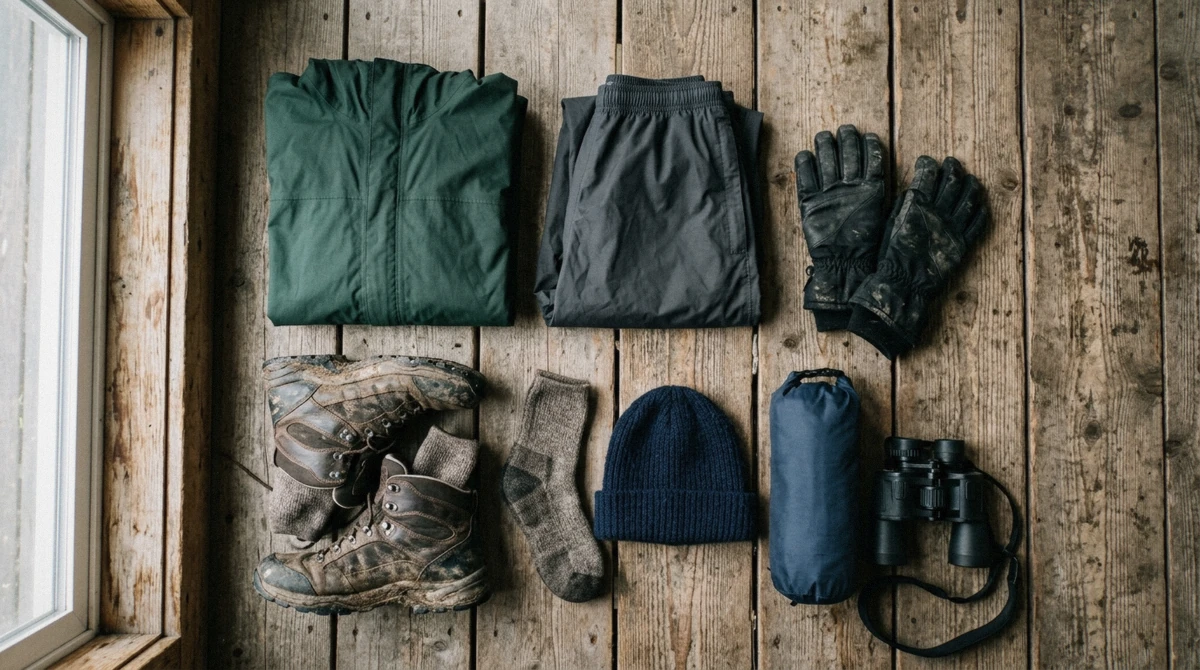
Quick answer The short version: shell, two layers, wet-tolerant footwear, and what the tours already give you
Wear a waterproof hooded shell over a thin fleece or synthetic mid-layer over a synthetic base layer, with trousers that dry fast and closed shoes with real tread. Skip the umbrella and skip cotton. The canoe trips supply rain jacket, rain pants, rain boots, paddling gloves and a dry bag, and the helicopter landings supply glacier boots, so check what your booking already covers before buying anything: the tours that provide the gear list their inclusions on each page.
Key takeaways
- Summer highs run 14.2 °C (57.6 °F) in May to 17.8 °C (64.0 °F) in July, and nights drop to 4.6 °C (40.3 °F) in May and 10.1 °C (50.1 °F) in July, so the mid-layer earns its place even in August.
- Rain falls on 16.7 days in June and 18.5 days in July. A waterproof shell with a hood is the one item nobody should leave behind, in any month. The full monthly picture is on the best time to visit page.
- Whale-watch boats run open decks alongside a heated cabin, and wind chill on the water matters far more than the air temperature suggests.
- Steep Creek changes what you carry, not what you wear: no eating and no flavoured drinks outdoors near the bear boardwalk.
- Footwear is the decision that costs people their afternoon. Nugget Falls Trail is 2 miles round trip on gravel and takes about 1 hour 15 minutes by Forest Service reckoning, and it is wet gravel most days.
What to Wear at Mendenhall Glacier
Three layers, chosen for wet rather than cold. Southeast Alaska in summer is not a cold-weather destination by any northern standard, but it is a wet one, and wet at 12 °C is colder than dry at 5 °C once you have been standing at a viewpoint for twenty minutes.
The layer system, and why cotton is the wrong answer
Start with a synthetic or merino base layer, thin, long-sleeved. Add a light fleece or a synthetic mid-layer. Finish with a waterproof shell that has a hood, not a water-resistant jacket and not a soft shell. That is the whole system, and it works from May through September without modification.
The reason cotton fails here is mechanical rather than aesthetic. A cotton t-shirt or a pair of jeans absorbs water, holds it against your skin and stops insulating entirely, and in a climate where 18.5 days of July carry measurable rain there is no realistic chance of staying dry from the outside. Synthetics and wool keep some insulating value soaked. This is the single most common mistake visitors make on a Juneau port day, and it is usually made in the ship's cabin, not at the glacier.
Trousers follow the same logic. Quick-drying hiking trousers or light softshell trousers are ideal. Rain trousers over the top are worth carrying for anything longer than a Visitor Center stop, and the canoe operators simply hand them to you.
The shell, the hood and the umbrella question
A hood beats an umbrella at Mendenhall for two reasons. Wind off the icefield funnels down the lake and turns an umbrella inside out, and both hands are useful on gravel trails and on a boat deck. Bring the hood, leave the umbrella.
Waterproof means taped seams and a hydrostatic head that survives sustained rain, not a showerproof jacket that gives up after twenty minutes. September and October see 232 mm and 214 mm of rain respectively, and even the summer months deliver rain that lasts hours rather than passing through. A cheap packable shell that fails on hour two is worse than no shell, because you will have left the good one behind.
Footwear: the decision that shapes your day
What you can get away with depends entirely on how far you plan to walk from the building.
Waterproof hiking boots or waterproof trail shoes are the right answer for anyone walking to Nugget Falls or beyond. Trainers with real tread are acceptable for a short visit in dry conditions and on the paved paths, and they will be soaked within the hour on a wet day. Rain boots are excellent if you are staying near the Visitor Center and terrible for a longer walk, because they blister. Sandals and flip-flops have no place on gravel that stays slick most of the season, and smooth-soled town shoes are a genuine slip risk on the boardwalks and stairs. In winter, add traction devices over whatever you wear, because the paths ice over and the grounds are open 06:00 to midnight all year whether or not anyone has gritted them.
Photo Point Trail is the exception that lets you dress down: a third of a mile, paved, about 15 minutes round trip, and suitable for wheelchairs and strollers. If the Visitor Center and Photo Point are the whole plan, ordinary shoes are fine. Anything longer is on gravel, and the trail details are set out on the things to do page.
What to wear by season
The kit below assumes the layer system above and lists what changes on top of it. Full seasonal weather detail sits on the best time to visit page.
| Season | Typical highs | Wear this |
|---|---|---|
| April and May | 9.3 °C (48.7 °F) to 14.2 °C (57.6 °F) | Base layer, fleece, waterproof shell, waterproof boots, light gloves and a beanie. Trails still carry ice and slush early in May. |
| June and July | 16.9 °C (62.4 °F) to 17.8 °C (64.0 °F) | Base layer, light fleece you can stuff in a bag, waterproof shell, quick-dry trousers, waterproof trail shoes, sunglasses. |
| August and September | 17.2 °C (62.9 °F) to 13.4 °C (56.1 °F) | Same as summer plus rain trousers. August and September are the wettest half of the season and the standing-around time at the bear boardwalk is real. |
| October | 8.5 °C (47.3 °F) | Warmer mid-layer, full rain shell and trousers, waterproof boots, warm hat. Building hours are intermittent, so assume you are outdoors. |
| November to March | 0.6 °C (33.1 °F) to 4.0 °C (39.2 °F) | Insulated jacket over the layers, waterproof insulated boots, traction devices, warm hat and gloves, headtorch for the short daylight. |
What to Bring
Short list, and every item on it earns its place for a reason specific to this site rather than to travel in general.
The packing list
This is the day-pack version for a normal glacier visit of two to five hours. A canoe or helicopter booking removes several lines from it, because those operators issue the waterproof layers themselves.
- Waterproof shell with a hood, worn or packed, in every month
- Thin fleece or synthetic mid-layer, because evenings drop to 10.1 °C (50.1 °F) even in July
- Quick-dry trousers, never jeans, because denim stays wet all day
- Waterproof footwear with tread, for gravel that is wet most days
- Binoculars, the highest-value item you can carry for both bears and whales
- Dry bag or a zip bag for your phone, because spray on the boats is constant
- Refillable water bottle, filled at the Visitor Center taps before you walk
- Snacks eaten indoors or on the bus, never outdoors near Steep Creek
- Sunglasses, because glare off ice and water is strong even under cloud
- Small cash for the fee machines and tips, since card is not universal
- Motion-sickness tablet taken an hour ahead if you are on a whale watch
- Traction devices from November through March, for iced paths
The Steep Creek rule that changes your day pack
This is the local rule almost every generic packing list misses. At Steep Creek, where black bears fish the sockeye and coho runs from July through September, the Alaska Department of Fish and Game guidance is explicit: do not eat food or drink flavoured beverages outdoors. Plain water is fine. A coffee, a soda, a sandwich or a bag of crisps opened on the boardwalk is not, because the smell draws bears toward people and that ends badly for the bear.
The practical consequence is that snacks travel sealed and get eaten on the bus or indoors, and your drink for the walk is water. It is also why there is no cafe inside the Visitor Center, which surprises people who assumed they could buy lunch on site. Carry what you need, and carry it closed.
Phone, camera and the wet-weather problem
Assume your camera will be rained on and sprayed. A dry bag solves this on a boat and a simple zip bag solves it on a trail, and both cost less than a phone repair. Lens cloths matter more than you expect: on a whale watch, sea spray leaves a film that ruins every shot after the first ten minutes.
Binoculars are the item that changes the day most. The glacier face sits across the lake from the main viewpoint, the mountain goats on the cliffs of Mount Bullard are specks without magnification, and federal rules keep boats 100 yards (91.4 m) from humpbacks, so on the water they are not a luxury either.
Dress for the Trip You Booked
If you booked a shuttle or trolley with free time at the glacier
you get a heated cabin on the ride and nothing else. Wear the full layer system and waterproof shoes, because the two hours at the glacier are entirely outdoors and entirely yours to manage.
If you booked a whale watch or a glacier and whale combo
add a windproof outer layer and a hat that stays on. The boats run open decks alongside a heated cabin, and the best viewing is outside in the wind.
If you booked a canoe crossing of Mendenhall Lake
travel light. Rain jacket, rain pants, rain boots, paddling gloves and a dry bag are provided, so bring only your own base and mid-layers, a hat and a change of socks.
If you booked a helicopter landing on the ice
wear long trousers and closed shoes to check in, and expect glacier boots to be issued for the walk on the ice. Sunglasses matter here more than anywhere else on this list.
If you are visiting independently and walking the trails
wear the boots. Nugget Falls Trail is 2 miles round trip on gravel and takes about 1 hour 15 minutes by Forest Service reckoning, and the way you get out there is covered on the getting there page.
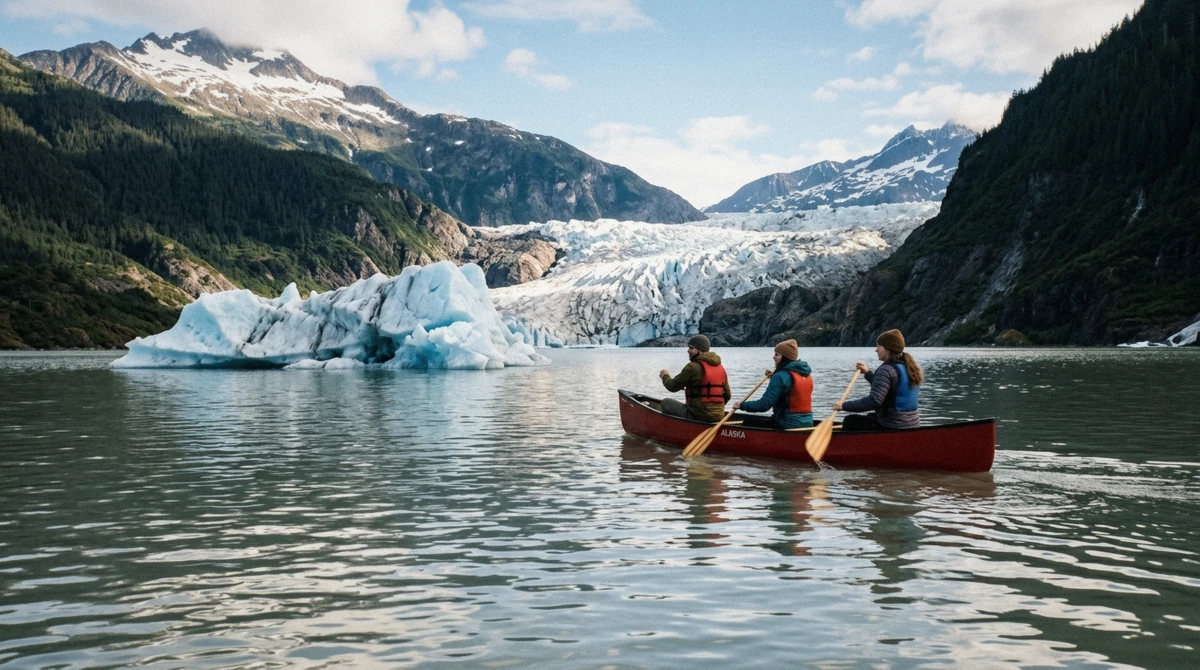
What the Tour Provides and What You Bring
The gap between tour types is wider than most visitors expect. Two of the four categories below hand you the technical gear; the other two hand you a heated cabin and nothing more, which is exactly why the footwear question matters so much on a shuttle day.
By tour type
Inclusions are read from the operator listings in 2026 and can change, so confirm on the listing before you leave the good jacket at home. Last verified: 2026.
| Tour type | What the tour provides | What you bring | Notes |
|---|---|---|---|
| Canoe crossing of Mendenhall Lake | Rain jacket, rain pants, rain boots, paddling gloves, dry bag, life jacket and paddle | Base and mid-layers, hat, spare socks, binoculars | The most gear-complete option on the site. See the Mendenhall Lake canoe tour, capped at ten paddlers. |
| Helicopter glacier landing | Glacier boots for walking on the ice, and a briefing before you fly | Warm layers, waterproof shell, sunglasses, gloves | Long trousers and closed shoes for check-in. Weather-dependent by nature, so keep the day flexible. |
| Whale watch and glacier combo | Heated cabin, naturalist commentary, often snacks and hot drinks on board | Windproof shell, hat, binoculars, motion-sickness tablet | Open decks are where the viewing happens. The double-decker whale watch runs an open top deck for exactly that reason. |
| Shuttle, trolley or Blue Bus | A heated coach and a narrated ride, nothing else | The complete layer system, waterproof shoes, water, snacks eaten on board | You are outdoors for the whole stop. Compare the gear-included glacier trips against these if you would rather not pack for rain. |
| Sea kayak in the Mendenhall Wetlands | Dry suit, paddle and life jacket | Thin layers underneath, hat, sunglasses | The dry suit does the waterproofing, so avoid bulky clothing beneath it. |
| Self-guided visit on foot | Nothing | Everything on the packing list above | Grounds and trails are open 06:00 to midnight year round, so an evening visit in June is possible and needs a warmer layer than the afternoon did. |
Why the open deck beats the cabin, and what that costs you
Every whale-watch boat in Juneau has a heated cabin and almost nobody uses it while whales are up. The open deck is where the sightlines are, and it is also where a 15-knot wind over 8 °C water makes a 17 °C air temperature feel like something well below 10 °C. This is the single biggest gap between what the forecast says and what your body reports, and it is why a windproof outer layer is on the list even for an August trip.
A hat that stays on your head is worth more than a fashionable one. So is a jacket that zips fully to the chin. The boats move at speed between sightings, and the wind chill during transit is far sharper than while drifting alongside a whale, because federal rules keep the boat 100 yards (91.4 m) off and the engines quiet once you are there.
If the wind is what puts you off, the glacier-only options solve it. A shuttle stop is entirely on land, and the trade-offs between the two shapes of day are set out on the tour times page.
What Not to Wear or Bring
Leave these behind
None of these are arbitrary. Each one comes from either the terrain, the weather record or the bear rules at Steep Creek.
- Jeans and cotton hoodies, because they soak through and stop insulating for the rest of the day
- Umbrellas, because wind off the lake ruins them and both hands are useful on gravel and on a boat
- Flip-flops, sandals and smooth-soled town shoes, because the gravel and the boardwalks are slick most days
- Open food and flavoured drinks for the trail, because of the bear rule at Steep Creek
- Heavy full-size camera bags for a short port call, because the walking is longer than people expect and there is nowhere to leave them
- A shower-resistant jacket standing in for a waterproof one, because Juneau rain lasts hours rather than minutes
- Anything you would be upset to see get wet, because on a normal day it will
Dressing for two venues in one day
Most Juneau days pair the glacier with something else: a boat, a helicopter, a walk into town before the ship sails. That argues for one outfit with removable pieces rather than a change of clothes you have nowhere to store.
The formula that works: base layer on all day, mid-layer on for the boat and off for the walk, shell on whenever you are outdoors and stuffed into the day pack when you are not. Boots stay on throughout. A spare pair of socks in the pack costs nothing and saves the last two hours of a wet day, which is the most reliably underrated item on this entire page.
If you have not yet decided which shape of day you want, the things to do page lays out what is actually reachable from the Visitor Center on foot.
The packing answer for Mendenhall Glacier fits in one line: a hooded waterproof shell, two thin layers under it, quick-dry trousers, footwear you are willing to soak, and binoculars. Everything else on this page is refinement. Summer highs of 14.2 °C (57.6 °F) in May through 17.8 °C (64.0 °F) in July and 17.2 °C (62.9 °F) in August are mild by Alaskan standards, and it is the 16.7 rain days of June and the 18.5 of July that decide what you should own, not the thermometer.
If you would rather not own any of it, book the water trips that hand you the gear at the dock and turn up in your ordinary clothes.
Questions About What to Wear and Bring
What should I wear to Mendenhall Glacier in summer?
A waterproof hooded shell over a thin fleece over a synthetic base layer, quick-dry trousers, and waterproof shoes or boots with tread. Summer highs run from 14.2 °C (57.6 °F) in May to 17.8 °C (64.0 °F) in July and 17.2 °C (62.9 °F) in August, which is mild, but rain falls on 16.7 days in June and 18.5 days in July, so the shell is the item that decides your day.
Do I need waterproof boots at the glacier?
If you are walking to Nugget Falls, yes. That trail is 2 miles round trip on gravel and takes about 1 hour 15 minutes by Forest Service reckoning, and it is wet more often than not. If you are staying on the paved Photo Point Trail, a third of a mile and about 15 minutes round trip, ordinary shoes with grip are fine. From November through March, add traction devices whatever you wear.
Can I wear jeans at Mendenhall Glacier?
No, and this is the mistake people regret most. Denim soaks through in the first sustained shower, holds the water against your legs for the rest of the day, chafes when wet and takes many hours to dry. In a place where more than half the days of every month carry measurable rain, quick-dry trousers or hiking trousers are the only sensible choice.
Can I wear shorts?
You can on a warm July day, and locals do, but carry trousers in the pack. Nights drop to 10.1 °C (50.1 °F) in July and 4.6 °C (40.3 °F) in May, wind on an open deck makes bare legs unpleasant fast, and rain trousers over shorts is not a combination anyone enjoys. Shorts work for a short land visit in dry weather and for very little else.
What do the tours provide, and what do I still need?
It depends on the shape of the trip. The canoe crossings provide a rain jacket, rain pants, rain boots, paddling gloves and a dry bag, and the helicopter landings provide glacier boots for the walk on the ice, so both leave you responsible only for your own layers. Shuttle and whale-watch passengers get a heated cabin and nothing more, so on a Blue Bus shuttle day everything you wear is your own.
How cold does it get on a whale-watch boat?
Colder than the forecast suggests. The boats run open decks alongside a heated cabin, and the best viewing is outside, where wind over cold water strips several degrees off an air temperature that might read 17 °C (63 °F). A windproof outer layer, a hat that stays on and gloves in the shoulder months are the fix. The heated cabin is there when you need it.
What should I bring for a canoe tour on Mendenhall Lake?
Very little. The operator issues the rain jacket, rain pants, rain boots, paddling gloves and a dry bag, so your job is the layers underneath: a synthetic base layer, a fleece, a hat and a spare pair of socks for afterwards. Leave loose valuables behind and put your phone in the dry bag rather than a pocket.
Why can I not eat outdoors near Steep Creek?
Because black bears fish the salmon runs there from July through September, and food smell draws them toward people. The guidance from Alaska Department of Fish and Game is to avoid eating food or drinking flavoured beverages outdoors near the creek. Plain water is fine. Keep snacks sealed and eat them indoors or on the bus, which is also why the Visitor Center has no cafe.